

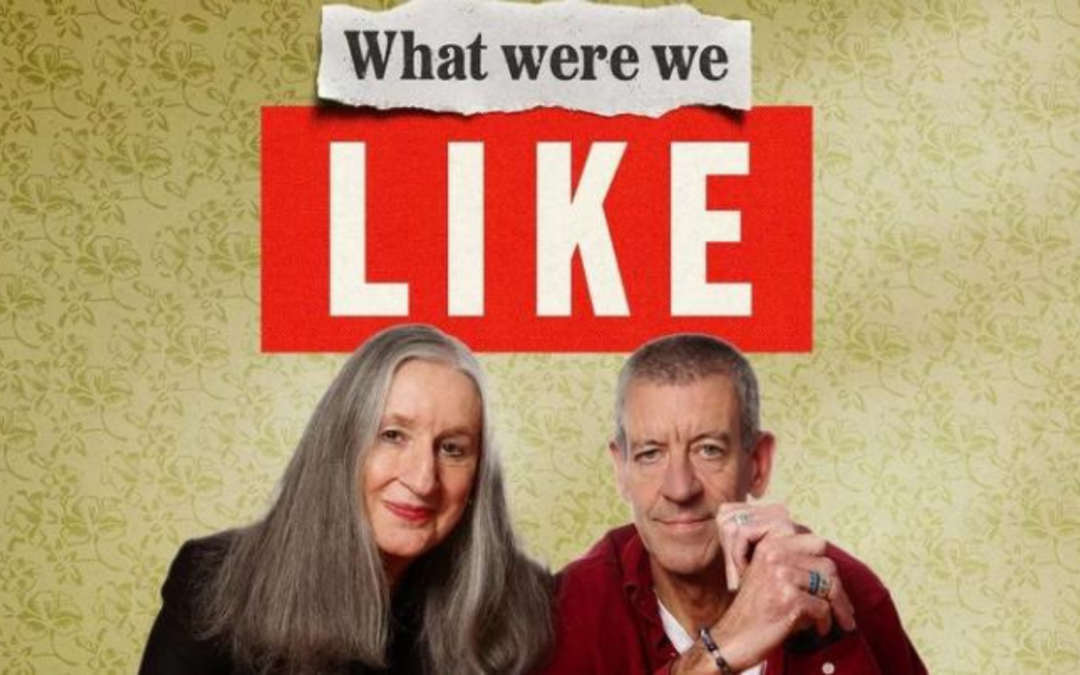
Diarmaid Ferriter and Catriona Crowe this week opened the new series of RTÉ’s History Podcast, What We Were Like, with an episode devoted to the Eighth Amendment and the campaign that culminated in constitutional protection for the unborn child being enshrined in the Constitution in 1983.
Yes, it was another new low for RTÉ, but what does it really matter? Repeating that fact – even if it’s true – becomes tiresome when it changes nothing.
What is not tiresome, however, is the growing public concern about RTÉ’s increasingly one- sided programming, together with growing calls for a full and detailed audit of its editorial decision-making and output. In that context, documenting what happened this week is anything but futile.
RTÉ is in receipt of €725 million in public funding over the current three-year period to run its operations, yet there isn’t as much as an off-peak programme hosted on the station that asks the hard questions on behalf of the public about how RTÉ is run, its editorial policy, or how it could do better in being accountable to the taxpaying public.
On the rare occasions when he answered questions about editorial policy in the past, RTÉ Director General Kevin Bakhurst offered little more than stock remarks about RTÉ’s commitment to fairness and balance while sidestepping the elephant in the room.
However, the call at a recent Oireachtas Media Committee meeting for a full audit of RTÉ’s editorial decision-making record can hardly have escaped Bakhurst’s attention. It is a clear indication that more rigorous scrutiny and more searching questions are coming his way.
Before attempts are made to explain away the latest programme on abortion as “just two people sharing their thoughts on the issue”, it’s worth noting that it is billed as a history podcast and is titled The History of the Eighth Amendment. It is co-hosted by a well-known historian (Ferriter) and a National Archivist (Crowe). That alone should create a reasonable expectation that the subject will be approached with balance, perspective and historical fairness.
Yet, over the course of the 37-minute programme, there is not a single line that offers even the slightest measure of fairness or acknowledgement to the pro-life side. Rather than presenting history, the programme substitutes advocacy for historical balance.
Whatever editorial process shaped this podcast, it looks like a decision was taken to cram in as many caricatures and clichés as possible and leave any notion of balance on the cutting- room floor.
The “Catholic right” was referenced multiple times and the supposed “hatred” of pro-lifers towards others, along with their “naked sectarianism” during the campaign, and the “bitterness” and “divisiveness” which, listeners were left to infer, emanated solely from the pro-life side. Crowe recalled having “doors slammed in our faces” being “called murderers” and even having “a dog set on me” while canvassing during the referendum. As if to reinforce the point about how objectionable those on the pro-life side were, Ferriter mentioned a paedophile priest who had apparently supported the Constitutional provision being proposed at the time.
This outlandish podcast illustrates just how far things can drift when basic journalistic standards are abandoned and those responsible for editorial oversight, including the Director General of RTÉ, choose to look the other way.
It was a cruel thing as well for the podcast presenters to reference the names of people like John O’Reilly and Dr Julia Vaughan (two of the driving forces behind the Eighth Amendment) in the midst of all the horrible things being said, while making no attempt to accurately reflect the immensely positive contributions these, and other heroes of the time, made to this country.
On issues that continue to divide opinion, Ferriter and Crowe offered what amounted to a single, settled narrative aligned with the pro-abortion perspective. The irony is striking: Crowe lamented that, while canvassing in 1983, many voters refused to “discuss any nuances.” Yet if ever there was a programme that seemed determined to avoid nuance, it was this one.
The treatment and death of Sheila Hodgers, a young mother who tragically died during pregnancy shortly before the 1983 Amendment, was blamed squarely on the pro-life ethos of the time. Yet precisely what happened in her case remains highly disputed, making the podcast’s sweeping conclusions impossible to justify. The same applies to the death of Savita Halappanavar in 2012, which was also discussed and described as an “echo of Sheila Hodgers.”
While the programme was filled with pro-abortion certainties that went entirely unchallenged, there was no mention of the widely publicised actuarial report which concluded that more than 100,000 lives were saved by the Eighth Amendment. Nor, unsurprisingly, did listeners hear that during the lifetime of the Eighth Amendment, Ireland consistently ranked among the safest countries in the world in which to be pregnant – safer than England or the United States, where abortion on request was freely available.
It is difficult to capture in words just how skewed the podcast was. But, based on recent experience, you can count on Ireland’s heavily taxpayer-funded media regulator, Coimisiún na Meán, to find a way to praise it and give it a clean bill of health as an exemplary production. The only problem for them – and consolation for us – is that more and more people are beginning to see through this closed-circle mentality of covering for one another.
At one point, Crowe remarked: “We used to go to Mass in order to walk out of Mass when the priest brought up the Yes vote.” She might also have mentioned that, on more than one occasion during referendum campaigns, RTÉ cameras just happened to be inside the church to capture those walkouts for the evening news. Naturally, it would be absurd to suggest that Ireland’s taxpayer-funded national broadcaster would ever indulge in such conveniently choreographed, one-sided set pieces.
I rarely watch rtayay. As the old saying goes, it’s a long road without a turning. Last Sunday’s gospel about the wheat and the weeds is pertinent here. These two completely abuse their power but when they meet their Maker there won’t be anywhere to pass the book. Prayer is the only thing that moves hearts and saves sinners.
The more blatant and brazen the propaganda becomes the easier it will be for people to see through it. Also RTE has accumulated by now a massive archive of material which future historians and archivists will use to demonstrate just how hopelessly biased RTE was. The tide will turn (it always does) because truth cannot be destroyed. When that time comes the people in establishment Ireland will be exposed.
On a lighter note the going on in RTE would provide enough material for an entire comedy series should anyone decide to produce it.
i never see the other side of the story ever been told nor the mothers who go in blind into an abortion and tell of the ghost inside their tummies yet again giving a shining light on freedom to choose to kill whether its right or not. RTE you never do proper journalism. it was all covered up and shown as a right where really its not. its immoral and unjust and the cell is human no matter what size as we dont go about saying oh I wonder what will come out its always called baby showers; its life at the moment of conception. we were all cells to begin with.
i remember the time I was doing prolife on the streets and I saw the other side handing out sweets to the children to what kill the other ones? its a total joke. When I asked to see their material they said no as I was wearing a prolife shirt so I took it off walked over and they handed it to me as I was not seen as the opposite of what they were promoting. they did not bat an eyelid nor recognised me. they also used an idea I had thought of to the use of their goal to encourage people to vote yes while my idea was innocent to get people to have a vote to vote no cause no is right. Who would think that a government would deny a doctor to do his job in deciding whether he should save a mother and her child of course going against their mission of doing so. After training for 7 years to become one to be removed from the right to do so in the first place. isnt hospitals about saving lives not destroying. I am shocked there is no upheaval in this decision. its downright evil. its by no means healthcare its deathcare and then when we see assisted suicide and euthanasia following suite. its really wrong how our thinking has changed.
1 in 6 healthy Irish unborn babies NOW KILLED by anti 8th Repealers abortion slaughter. 65000+ killed post 8th. Half KILLED are FEMALE ♀️.
Anti 8th Repeal is a national Irish baby killing disaster.
Feiritear/Crowe need to put these baby killers facts in their history book & their heads. All those dead babies in Savita’s name. Anti 8 Repealers fruits.
Keep life saving 3 day abortion wait. No paid abortion leave. Kick ALL anti 8th Repealers out. Support ALL prolife groups TDs NOW. Repeal is an Irish national baby killer disaster. DUMP it’s cheerleaders.
RTE were unapologetic promoters of the “yes” vote. Two of the big earners, Joe Duffy and Ray D’Arcy seldom let a day pass without a “yes” mention….revolting