

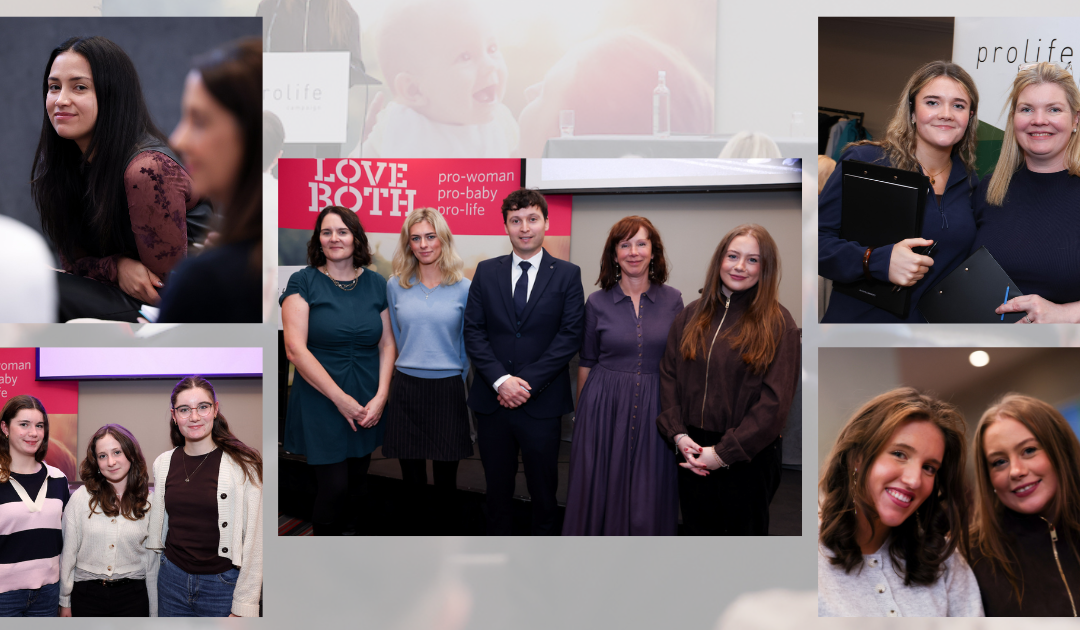
The growing controversy over Sinn Féin’s bill to scrap the three-day abortion waiting period was a central focus of the Pro Life Campaign’s National Conference 2026 last weekend in Dublin, with speakers questioning the handling of the legislation by the Oireachtas Health Committee.
Addressing hundreds of attendees at the Gresham Hotel, Eilís Mulroy of the Pro Life Campaign said: “The Oireachtas Health Committee, tasked with scrutinising Sinn Féin’s bill to abolish the three-day waiting period, invited ‘expert’ witnesses who, in one case, endorsed its abolition without consulting with any of their 4,900 members. The other group of so-called experts they invited, namely senior representatives from the HSE, failed to provide a single piece of evidence to substantiate their call for scrapping the three-day wait. Yet the women with first-hand experience of the reflection period – arguably the most important voices in this entire debate – were refused a meeting with the Committee. To call what happened a fiasco or a travesty would be a monumental understatement.”
She continued: “Based on what unfolded at these hearings, the Oireachtas Health Committee has no credible evidential basis for recommending that Sinn Féin’s bill advance to the next stage of becoming law. To prevent further damage to the integrity of the process, the bill’s sponsors should do the honourable thing and shelve it.
Echoing these concerns, guest speaker and Aontú TD Paul Lawless criticised the Health Committee’s refusal to meet with women who changed their minds during the three-day waiting period and decided to continue their pregnancies.
Referring to the recent Unheard Voices meeting in Dublin, he told the conference: “I had the privilege of meeting women who had attended their first abortion appointment, experienced the three-day waiting period and ultimately decided to continue their pregnancies. No political argument could have brought home the significance of the three-day wait more powerfully than that gathering. And it stood in stark contrast to what has been happening at the Oireachtas Health Committee. These women deserve to be heard. Their children matter. Their experiences matter. Their voices matter.”
Independent Ireland councillor Linda de Courcy, who represents the Clondalkin LEA, also highlighted the thousands of women who attended an initial abortion appointment but did not return for an abortion after the three-day waiting period had elapsed. She urged attendees at the conference never to allow themselves to be “bullied” into silence on the issue and emphasised the need for society to work together to provide greater support to women facing unplanned pregnancies.
Fleur Elizabeth Meston, who travelled from England and played a part in the recent defeat of the pro-euthanasia bill at Westminster, addressed the conference on this landmark victory.
Turning to the debate in Ireland, she struck a positive but cautionary note: “Britain already influences your debate. Euthanasia has dropped down the agenda here in part because of what happened at Westminster. The idea that every country must travel in the same direction has been punctured, and Canada’s decision to halt its mental-health expansion has punctured it further. The tide is not as strong as they told us.”
Referring to the strong opposition to euthanasia among medical professionals in Ireland, she added: “The medical profession has a significant impact here. That is a strength, as long as you use it effectively. Look at Hope Ireland, the coalition of medical professionals opposed to assisted suicide. Their work shows that clinicians are not a monolith. When doctors in Britain voiced their concerns, politicians listened.”
Philomena Tierney, an active and dedicated young member of the pro-life movement, also addressed the conference, receiving an enthusiastic reception from those present. She told attendees: “As a 22-year-old, I think a lot about the type of country that my generation is growing up in. One thing that concerns me is how many women facing an unplanned pregnancy are let down. They deserve the information, support and time they need to make an informed decision. But too often, that just isn’t happening. As a young person, I want to look back and know that my generation didn’t simply accept things as they were. We spoke up, challenged what needed to be challenged, and worked to make things better for women and their babies. Ultimately, this is about the kind of society we want to build: one where women receive the support they deserve, honest conversations are encouraged, and every human life is treated with dignity. I believe we can make a difference. And if we continue working together with courage, conviction and compassion, we can help build that future.”
See conference photos here.